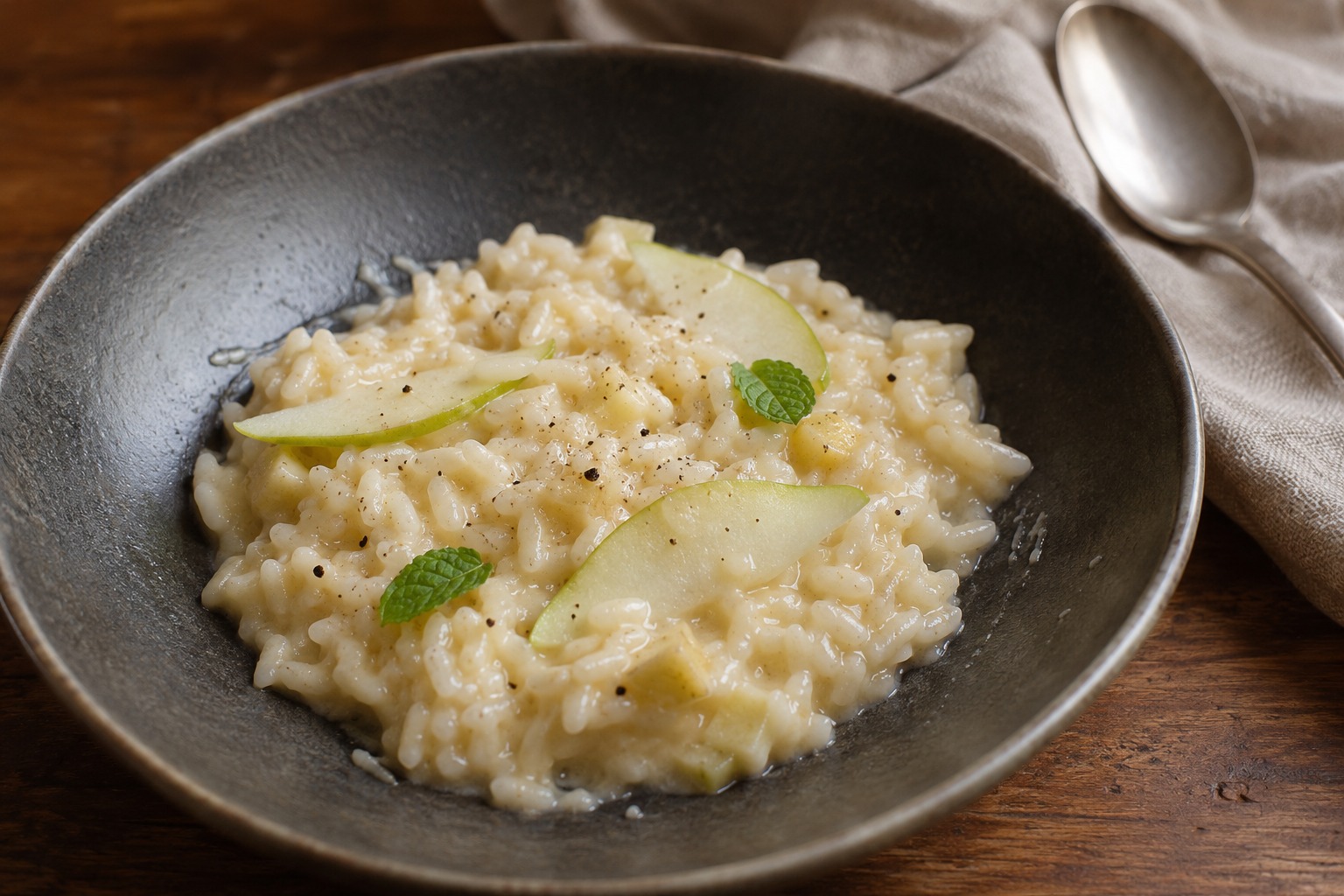
Apple and gorgonzola risotto
6
people15
minutes40
minutes450
kcal55
minutesThis risotto delizia by Bernie Torras combines tart Granny Smith apples with gorgonzola and Parmesan. Diced apple goes in halfway through cooking, with a small amount reserved as thin shavings to finish the dish with mint. It makes six moderate servings of creamy rice, spooned straight onto the plate. Put on Puchero MIX - Italian Kitchen Rhythms and have every ingredient ready before starting the rice.
Keep your device screen on while you cook
Ingredients
- Shallot base
3 shallots, about 120 g peeled, finely chopped
20 g mild olive oil
- Rice
400 g uncooked Arborio rice
125 ml dry white wine
1.5 l low-salt chicken and vegetable stock; check whether it contains celery
2 Granny Smith apples, about 300 g prepared weight in total: one and a half for cooking and half for finishing
- Cheese and finishing touches
100 g gorgonzola dolce, rind removed, cut into pieces
50 g freshly grated Parmesan
2 g fine salt, adjust to your stock and cheeses
0.5 g ground black pepper, a pinch for cooking and the rest for serving
2 g fresh mint, about 12 small leaves
Method
- Heat the stock in a saucepan and keep it hot over a low heat. Chop the shallots, grate the Parmesan and cut up the rindless gorgonzola. Wash the apples. Reserve half an apple with its skin for finishing, then peel and core the rest and cut into 5–7 mm dice. Aim for about 225 g of diced apple and 75 g for the garnish.
- Heat the oil in a wide pan and add the shallots. Cook over a medium-low heat for about 15 minutes, stirring, until soft and lightly golden. If they begin to stick, add a tablespoon of stock and lower the heat.
- Add the unwashed rice and stir over a medium-low heat for 2 minutes to coat it in the shallot base and turn the edges of the grains slightly translucent. Pour in the white wine and reduce for about 2 minutes, stirring, until very little free liquid remains.
- Add two ladles of hot stock and start timing the rice. Keep at a gentle simmer and stir frequently. Add more stock, one ladle at a time, when the previous addition is almost absorbed, keeping the rice from drying out or swimming in liquid.
- After 8 minutes from the first addition of stock, stir in the diced apple. Continue cooking at the same gentle simmer, adding stock and stirring carefully. The apple should become tender while retaining small pieces.
- Start tasting the rice after 16 minutes and finish cooking at around 18–20 minutes, depending on the brand: the centre should offer a little resistance without being hard. Use only as much stock as needed; some may remain. If it runs out before the rice is ready, add a little hot water. Turn off the heat while the risotto is still slightly looser than you want to serve it.
- Off the heat, stir in the gorgonzola and Parmesan until melted into the rice. Add a pinch of pepper, taste and adjust the salt. If it becomes too thick, add a few tablespoons of hot stock until it moves gently when you tilt the pan.
- Slice the reserved half apple very thinly just before serving. Divide the risotto between six warm shallow bowls, letting it spread naturally. Share out the apple shavings, about two small mint leaves per bowl and the remaining pepper. Serve immediately.
Notes
- Use the same weight of Carnaroli rice if preferred; follow the pack timing and taste the grains. Do not rinse the rice, as its starch helps thicken the risotto. Keep the stock hot to maintain a steady cooking temperature.
- Granny Smith apples add acidity and hold their shape. Substitute a firm, not-too-sweet apple or firm pear at the same prepared weight. If using a stronger blue cheese, start with 70–80 g and taste before adding the rest.
- To leave out the wine, replace it with an extra 125 ml of stock. For a vegetarian version, use vegetable stock, a blue cheese made with microbial rennet and a vegetarian hard cheese in place of Parmesan; check the labels.
- Risotto thickens as it stands. Have the plates and finishing ingredients ready and serve straight away. If the cheese makes it too thick, add hot stock gradually; avoid keeping it on the heat, as the rice will continue to soften.
Equipment
- Wide, heavy-based pan
- Saucepan to keep the stock hot and ladle
- Scales and measuring jug
- Knife, chopping board and peeler
- Fine grater and spoon or spatula
- Six shallow bowls
Estimated nutrition per serving
- Calories: 450kcal
- Fat: 12.3g
- Saturated Fat: 5.6g
- Sodium: 420mg
- Carbohydrates: 65.3g
- Fiber: 2.7g
- Sugar: 7.5g
- Protein: 16.4g
Have you made this recipe? I want to see it!
Tag @pucheromix on Instagram with the hashtag #mipuchero