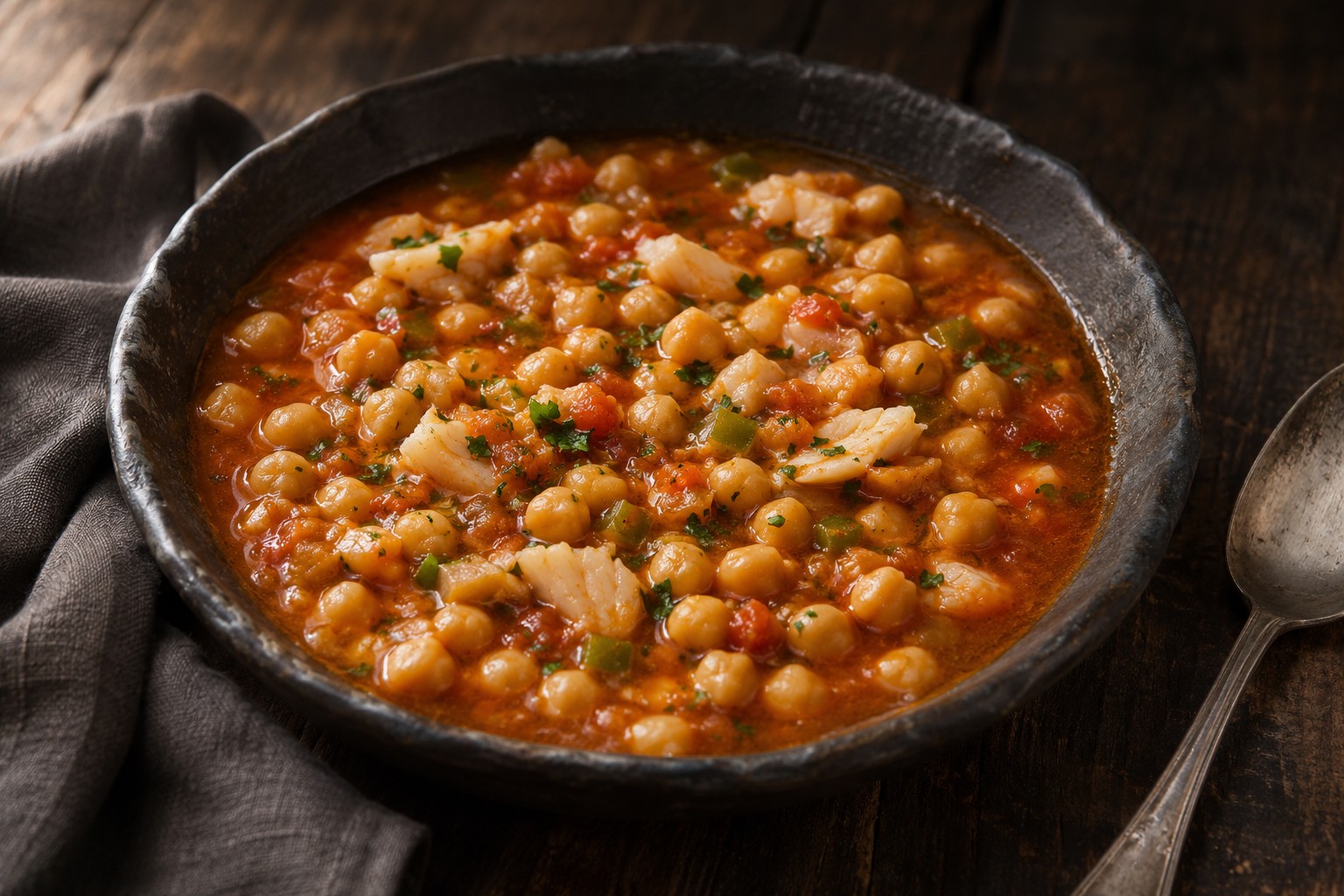
Chickpea and salt cod suquet
6
servings20
minutes50
minutes490
kcal1
hour10
minutesA warming Catalan stew with small chickpeas, flakes of salt cod and slowly cooked tomato and green pepper. A picada of garlic, parsley, dried ñora pepper and cod skin gives the broth body without flour. A recipe from Bernie Torras’s collection to cook at an easy pace and serve piping hot, with Puchero MIX’s Cod’s Folk in the background.
Keep your device screen on while you cook
Ingredients
- For the stock
1 l unsalted chickpea cooking liquid, reserved separately
100 g fresh, clean, unsalted cod backbone, for the stock only
50 g cod swim bladder, already hydrated, desalted and cleaned
- For the stew and picada
1000 g small chickpeas, cooked and drained, preferably without salt
100 ml olive oil, for the whole recipe
3 garlic cloves, peeled (about 9 g)
1 green pepper, trimmed and finely diced (about 150 g net)
3 ripe tomatoes, peeled, deseeded and chopped (about 450 g pulp)
100 ml dry white wine
200 g salt cod, already desalted, skin on and boneless, weighed before cooking
15 g hydrated ñora pepper pulp, without seeds or skin
10 g parsley leaves
Salt, only if needed at the end
Method
- Check that the cod and swim bladder are already desalted and ready to cook. Remove any remaining dark membrane from the swim bladder and cut it into pieces. Remove the cod skin and reserve it for the picada; check for bones and separate the flesh into medium flakes. Prepare the pepper, tomatoes and garlic. If using salted products, complete the supplier’s desalting process in the refrigerator before starting.
- Place the litre of chickpea cooking liquid, clean backbone, swim bladder and cod skin in a saucepan. Bring to a gentle simmer and cook for 10 minutes. Remove the backbone and skin; discard the bones and reserve the cooked skin. Continue cooking the swim bladder until tender, around 20–30 minutes in total as a guide, or as directed by the supplier. Strain through a fine sieve and reserve both stock and swim bladder. Top up with water to restore approximately one litre of stock.
- While the stock cooks, blend the three garlic cloves with the 100 ml oil. Reserve one measured 15 ml tablespoon of this mixture for the picada and pour the rest into a wide casserole. Heat gently for 2–3 minutes until the garlic begins to colour, without burning. Add the green pepper and cook for 5–7 minutes.
- Add the tomatoes and gently cook the sofrito for about 15 minutes until concentrated, stirring occasionally. Pour in the wine, raise the heat slightly and reduce for 4–5 minutes until no loose liquid remains. This reduction does not guarantee that all the alcohol disappears.
- Add the cooked chickpeas, the tender swim bladder cut into small pieces and about 900 ml of the strained stock. Simmer gently for about 8 minutes. Add the remaining stock if needed: the stew should be brothy, with the chickpeas whole and covered, without being watery.
- Blend the reserved tablespoon of garlic oil with the parsley, ñora pulp, cooked cod skin and one measured 15 ml tablespoon of hot stock. Make a fine picada; chop the skin first if it is difficult to blend.
- Add the cod flakes to the stew and cook gently for about 4–5 minutes, depending on their thickness. Stir in the picada and simmer gently for a further 3 minutes to bring the sauce together and cook the garlic. Check that the cod is opaque, flakes easily and reaches 63 °C at its centre. Gently shake the casserole rather than stirring vigorously, to keep the fish intact.
- Taste and add salt only if needed. Loosen with a little hot water if the stew has become too thick. Divide the chickpeas, cod, swim bladder and broth evenly between six deep plates and serve hot.
Notes
- Use ready-desalted cod and cod swim bladder, or follow your supplier's desalting instructions. Taste the stew before adding salt.
- The cod swim bladder should be tender and gelatinous before adding it. If still firm, simmer it longer before adding the cod flesh.
- Gently shake the pan to bring the sauce together without breaking the chickpeas. Loosen a thick stew with a little hot chickpea cooking water.
- Make the base a day ahead, cool it quickly and refrigerate. Add the cod when reheating so it stays moist.
Equipment
- Wide casserole and saucepan for the stock
- Fine sieve and fish-bone tweezers
- Hand blender or small blender jug
- Knife, chopping board, scales and measuring jug
- 15 ml measuring spoon and kitchen thermometer
Estimated nutrition per serving
- Calories: 490kcal
- Fat: 20.1g
- Saturated Fat: 2.7g
- Sodium: 286mg
- Carbohydrates: 52.3g
- Fiber: 14.5g
- Sugar: 11.1g
- Protein: 23.7g
Have you made this recipe? I want to see it!
Tag @pucheromix on Instagram with the hashtag #mipuchero