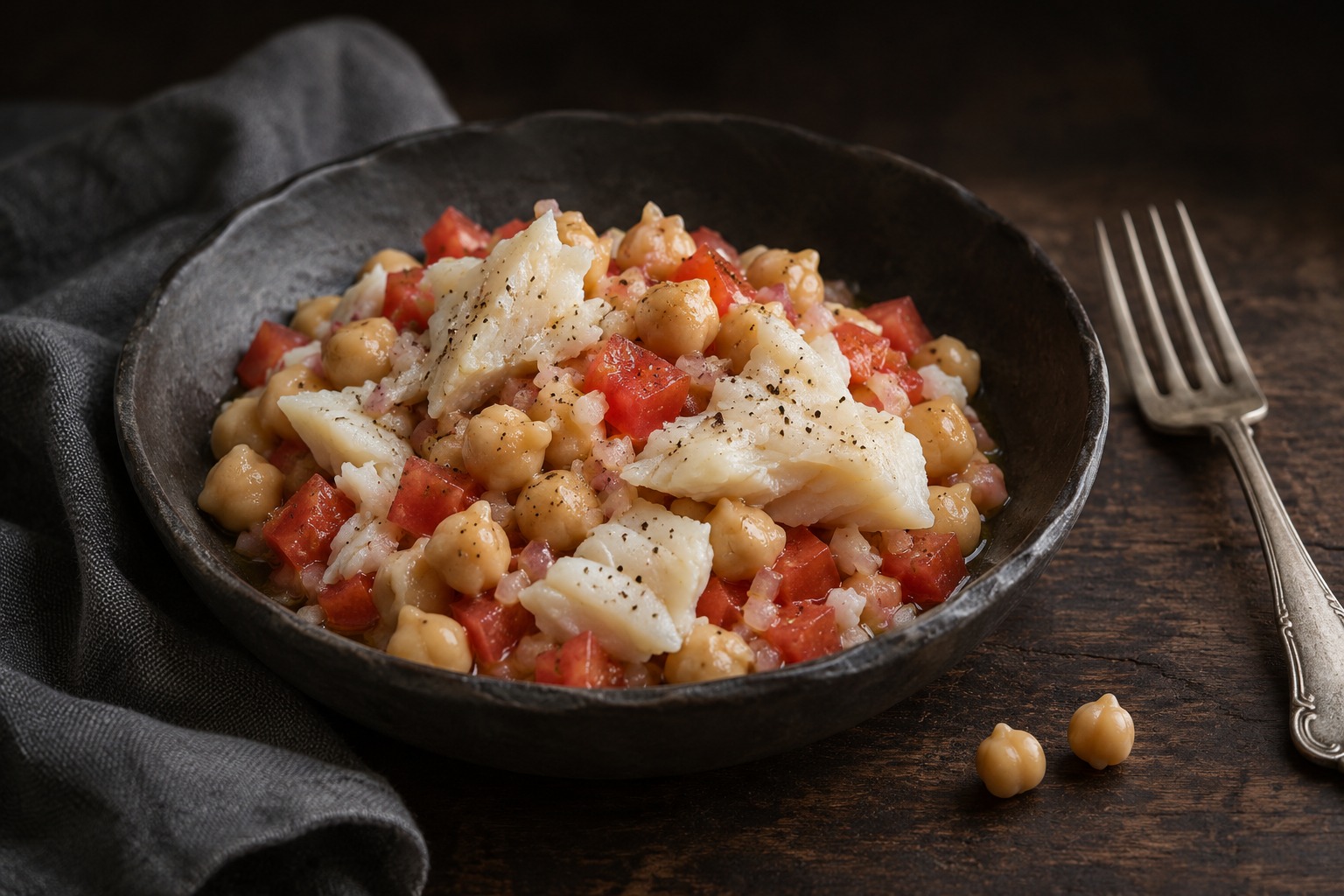
Chickpea salad with confit salt cod
6
servings20
minutes20
minutes280
kcal/serving15
minutes55
minutesCooked chickpeas, tender flakes of confit salt cod, peeled tomato and shallot with a simple vinaigrette. A salad from Bernie Torras's collection for six starter portions, keeping the fish moist and the chickpeas whole.
Mantén encendida la pantalla de tu dispositivo mientras cocinas
Ingredients
300 g cooked chickpeas, well drained
250 g confit salt cod, drained, skin and bones removed (finished weight; start with about 300 g raw, fully desalted cod if preparing it yourself)
4 ripe tomatoes, to peel and deseed
1 shallot
6 tablespoons olive oil for the vinaigrette (about 90 ml)
2 tablespoons white wine vinegar (about 30 ml)
Additional olive oil to cover the cod for poaching; about 400–500 ml in a small snug pan, depending on its size
Salt and black pepper to taste
Method
- If using already prepared confit cod, weigh out 250 g drained and go to step 3. Otherwise pat dry about 300 g fully desalted, boneless cod. Place in a snug saucepan and cover with olive oil. This oil is separate from the six tablespoons for the vinaigrette.
- Keep the oil at around 80 °C over very low heat, without frying. Gently poach for roughly 15–20 minutes, depending on thickness, until the centre of the fish reaches 63 °C on a food thermometer. Lift out, drain and let the heat dissipate in a shallow container for about 15 minutes. Remove skin and any remaining bones, separate into flakes and weigh the 250 g needed.
- While the cod cooks, wash the tomatoes and score a shallow cross in their bases. Blanch in boiling water for about 20–30 seconds, cool in cold water and peel. Remove the seeds, dice the flesh and drain off excess juice.
- Peel and finely chop the shallot. Drain the chickpeas thoroughly, rinsing first if canned. Put them in a bowl with the tomato and shallot.
- Whisk the two tablespoons of vinegar with a little pepper and only a small amount of salt. Add the six tablespoons of vinaigrette oil and whisk to combine.
- Add the lukewarm or cool cod to the bowl. Pour over the vinaigrette and fold together gently, distributing the dressing without breaking up the flakes or crushing the chickpeas.
- Taste before adjusting the salt: desalted cod may still contain quite a lot. Divide among six starter plates, sharing out fish, chickpeas and dressing evenly.
- Serve when ready or cover and refrigerate at 4 °C or below. Allow extra chilling time for a thoroughly cold salad. Do not leave cooked fish or the salad at room temperature for more than two hours.
Notes
- Source: F0214-1, 'Cigrons amb bacallà', serving six. The scan specifies 300 g cooked chickpeas, 250 g confit cod, four tomatoes, one shallot, six tablespoons oil and two tablespoons vinegar. There are no handwritten amendments to this preparation.
- The 250 g cod is its finished cooked, drained weight. About 300 g raw is a shopping guide; cooking loss varies. Use fully desalted cod or follow the supplier's desalting instructions before starting. The poaching oil is separate and is not poured into the salad.
- A tablespoon is taken as 15 ml. White wine vinegar is an explicit choice for the unspecified vinegar in the source. Temperature, timing and yield are added guides: 20 minutes preparation, 20 cooking and about 15 cooling, 55 total, with tasks overlapping. Desalting and cooking dried chickpeas are excluded.
- Estimated nutrition per sixth, including all the vinaigrette: 300 g unsalted cooked chickpeas, 250 g cooked cod, about 500 g usable tomato, 25 g shallot, 90 ml oil and 30 ml vinegar. An extra 10 g retained poaching oil is assumed for the whole recipe; this is not measured absorption.
- Sodium assumes about 300 g raw desalted cod containing 1.4 g salt per 100 g, with all that salt retained after cooking. Product labels and desalting can change the result substantially: about 289 mg sodium per serving, equivalent to 0.72 g salt, before added seasoning. Other nutrients use generic USDA SR28 foods; carbohydrate includes fibre. Finished serving weight is unmeasured; drinks and other menu dishes are excluded.
- Allergens: fish; sulphites if declared on the vinegar label. Check cod, cooked chickpea and vinegar labels for other ingredients or traces. The six portions are intended as starters.
Equipment
- Small snug saucepan for oil poaching
- Food thermometer
- Saucepan and bowl for blanching and cooling
- Colander, slotted spoon and scales
- Knife and chopping board
- Mixing bowl and whisk
Estimated nutrition per serving
- Calories: 280kcal
- Fat: 17.1g
- Saturated Fat: 2.3g
- Sodium: 289mg
- Carbohydrates: 17.7g
- Fiber: 4.9g
- Sugar: 4.9g
- Protein: 14.8g
Have you made this recipe? I want to see it!
Tag @pucheromix on Instagram with the hashtag #mipuchero