6
servings45
minutes45
minutes440
kcal0
minutes0
minutes1
hour30
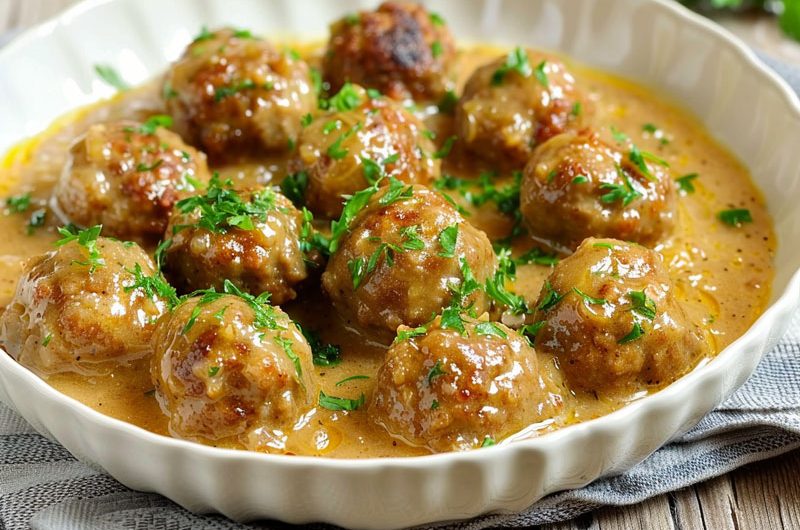
minutesThese juicy beef and pork meatballs are seasoned with garlic and parsley, browned and finished in a rich almond sauce with a touch of white wine. A comforting recipe with traditional Spanish flavours. While the sauce reduces and the meatballs absorb its flavour, enjoy the selected playlist and let the music accompany your cooking.
Mantén encendida la pantalla de tu dispositivo mientras cocinas
Ingredientes
- For the meatballs
500 g Minced meat (50% beef and 50% pork)
1 Garlic clove, peeled and finely chopped
1 Egg, beaten
50 g White bread for soaking
3 tbsp Water for soaking the bread
1 Onion, finely diced
2 c.s. Chopped parsley
Nutmeg (very little)
Salt and pepper to taste
Flour for coating
Olive oil for frying
- For the almond sauce
2 tbsp Olive oil
115 g Marcona almonds
150 ml White wine
Salt and pepper to taste
25 g White bread for frying
2 Garlic cloves, finely chopped
450 ml Vegetable stock
Pasos
- For the meatballs
- Soak the 50 g of white bread in 3 tablespoons of water and drain off any excess. In a large bowl, combine the minced beef and pork, finely diced onion, garlic, chopped parsley, soaked and drained bread and beaten egg. Add a pinch of nutmeg, salt and pepper to taste. Mix until evenly combined.
- Take small portions of the mixture and shape into walnut-sized meatballs, making about 30. Lightly coat each meatball in flour to prevent sticking.
- Heat enough oil in a large frying pan over medium-high heat. Fry the meatballs in batches until browned on all sides. Remove with a slotted spoon and place in a small casserole.
- For the almond sauce
- Heat 2 tablespoons of olive oil in a medium saucepan over medium heat. Add the 25 g of white bread and the Marcona almonds. Fry until the bread and almonds are golden.
- Add the chopped garlic and cook for a couple of minutes until fragrant. Pour in the 150 ml of white wine and reduce until almost all the liquid has evaporated. Season with salt and pepper to taste.
- Transfer the mixture to a blender or food processor. Add the vegetable stock gradually while blending until the sauce is smooth and slightly thick.
- Return the blended sauce to the saucepan and cook over low heat for about 15 minutes to bring the flavours together.
- With 5 minutes of sauce cooking time remaining, add the reserved meatballs and let them cook together. Adjust the salt and pepper if needed.
- Pour the sauce over the meatballs in the small casserole to cover them well. Sprinkle with a little chopped parsley just before serving.
Notas
- A teaspoon of cumin or sweet paprika can add more depth of flavour.
- Do not let the garlic burn, as it can make the sauce bitter. Cook it until translucent and fragrant.
- The almond sauce also works well with an entrecôte steak, monkfish or cod.
- Yield: about 30 meatballs for 6 people; approximately 5 meatballs per person, with their share of the sauce.
- Estimated nutrition per serving: one sixth of the recipe, including the sauce and excluding side dishes. Assumptions used only for this calculation: 250 g of ground beef with 13.1% fat and 250 g of ground pork with 16% fat; 20 g of flour incorporated; and 47 g of oil consumed in total (27 g in the sauce and 20 g absorbed during frying).
- Estimate based on USDA FoodData Central composition data, using ground veal as a composition proxy for the beef, blanched almonds for Marcona almonds and vegetable stock providing 6 kcal per 100 ml. Assumes a 50 g egg without its shell, a 150 g onion and retention of 40% of the wine’s initial alcohol. Total carbohydrate includes fiber. Actual values vary with the ingredients and frying; cooked serving weight, salt and sodium are not estimated.
Nutrition facts (per serving)*
- Calories: 440kcal
- Fat: 31.5g
- Saturated Fat: 6.5g
- Carbohydrates: 16.6g
- Fiber: 3.0g
- Sugar: 3.0g
- Protein: 22.4g
Have you made this recipe? I want to see it!
Tag @pucheromix on Instagram with the hashtag #mipuchero