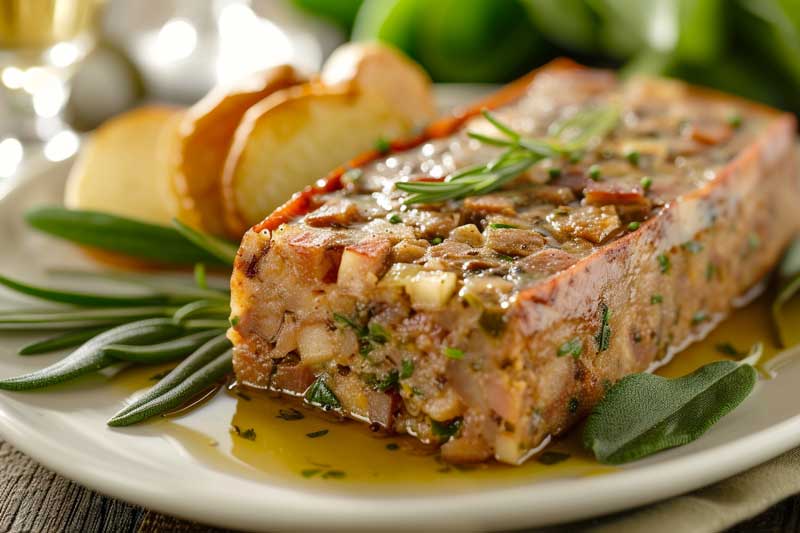
Duck terrine with pepper

To the point
The recipe

Terrina de pato a la pimienta

Recipe by Bernie Torras
0.0 from 0 votes
Course: EntranteCuisine: FrancesaDifficulty: Difícil
Raciones

8

raciones
Tiempo preparación

1

hour 
Tiempo cocción

1

hour 
Calorías

1073,77

kcal
Tiempo reposo

2

hours 
Tiempo maceración

180

minutos
Tiempo refrigeración

120

minutos
Tiempo total

9

hours 

Embárcate en un viaje culinario hacia la elegancia y la sofisticación con nuestra receta de Terrina de Pato a la Pimienta, una delicia gastronómica que promete transformar tu mesa en una celebración de sabores intensos y texturas seductoras. La cuidadosa selección de ingredientes, desde el pato deshuesado, pasando por el hígado hasta el beicon y el jamón de York, se entrelazan magistralmente con chalotas, apio, y una mezcla armoniosa de hierbas y especias, culminando en una pieza central que captura la esencia de una cocina refinada.

La preparación, aunque meticulosa, te guiará a través de la marinada, el adobo y la cocción al baño María, asegurando ese momento de triunfo cuando la terrina se revele en su plenitud, exquisitamente balanceada y rebosante de ese sabor a pimienta verde que seduce el paladar. Completa esta experiencia culinaria escuchando nuestra playlist selecta, diseñada para inspirarte y acompañarte en cada paso, sumergiéndote en un ambiente que realza el placer de cocinar. Anímate a crear esta obra maestra que no solo satisface el apetito, sino que también deleita los sentidos, haciéndote viajar a través de los sabores y las melodías.

Modo cocción

Mantén encendida la pantalla de tu dispositivo mientras cocinas

Ingredientes

  • 2 kg Pato deshuesado

  • 1 Hígado de pato

  • 500 gr Beicon

  • 100 gr Jamón de York

  • 2 Chalotas

  • 1 Rama apio

  • 1 Cebolla

  • 1 Rama perejil

  • 1 c.c. cuacharadita café tomillo

  • 1 Hoja laurel

  • 1 c.s. Pimienta verde

  • 10 cl Vino Jerez

  • 3 c.s. Nata líquida

  • 15 gr Mantequilla

  • Sal

Pasos

  • Adobo y marinado del pato:
  • Corta el pato deshuesado en trozos gruesos y deja el filete entero de la pechuga aparte.
  • Coloca el pato en un recipiente hondo como una fuente, sazónalo con sal, tomillo, y báñalo con el vino de Jerez. Deja marinar durante tres horas.
  • Preparación de ingredientes:
  • Coloca la pechuga de pato en remojo en agua fría.
  • Pela y corta la cebolla en cuartos. Pela y pica finamente las chalotas y el perejil (brunoise).
  • Retira la piel dura del beicon y córtalo en dados gruesos (parmentier) reserva unas lonchas finas para después. Corta el Jamón de York en trozos pequeños (macedonia).
  • Procesamiento de la pechuga:
  • Escurre bien la pechuga de pato de la marinada y córtala en tiras (juliana).
  • Cocción del hígado:
  • En una sartén con mantequilla caliente, fríe el hígado de pato hasta que esté dorado.
  • Preparación del relleno de la terrina:
  • En el vino de la maceración (previamente utilizado para el pato), añade los trozos de beicon, de pato, la cebolla en cuartos, las chalotas, el perejil, sazona con más pimienta y sal. Agrega el huevo batido con la nata líquida y mezcla todo bien.
  • Montaje de la terrina:
  • Tapiza el fondo de una terrina con las tiras de beicon muy finas. Coloca la hoja de laurel en el centro.
  • Rellena la terrina alternando con tiras de pechuga, trozos de jamón, y colocando el hígado en el centro. Finaliza con una capa del relleno preparado.
  • Cubre toda la mezcla con las tiras de beicon restantes. Tapa la terrina.
  • Cocción:
  • Cocina al baño María en horno precalentado a 210°C durante una hora.
  • Enfriado:
  • Retira del horno, destapa y coloca un peso sobre la terrina para prensarla mientras se enfría.
  • Una vez fría, refrigérala hasta el momento de servir.

Notas

  • Para este plato, es esencial seleccionar un pato de buena calidad. La grasa del pato contribuirá notablemente a la jugosidad y sabor de la terrina. No dudes en consultar a tu proveedor de confianza sobre cuál sería la mejor opción.
  • El hígado de pato debe manejarse con cuidado. Para evitar que se deshaga o cocine de más, fríelo apenas hasta que esté sellado por fuera pero aún ligeramente rosado por dentro. Esto garantizará una textura cremosa y un sabor intenso en el centro de nuestra terrina.
  • Para darle aún más profundidad de sabor a la terrina, podrías considerar añadir una pequeña cantidad de brandy o coñac junto con el vino de Jerez en el adobo. Esto aportará notas complejas y sofisticadas que complementarán de maravilla al pato.
  • Al montar la terrina, realiza el proceso con delicadeza para asegurar capas bien definidas y una distribución uniforme de los ingredientes. Esto no solo afectará la presentación, sino también la experiencia en cada bocado, donde los sabores y texturas se complementarán equitativamente.
  • Una vez cocida y enfriada, es crucial darle a la terrina suficiente tiempo de reposo en el refrigerador, idealmente de un día para otro. Esto permitirá que los sabores se consoliden y la gelatina que se forma naturalmente durante la cocción, se asiente correctamente, facilitando el corte de la terrina. Sirve en lonchas finas acompañadas de pan de campo tostado, una ensalada de hojas verdes ligeramente aliñada, y posiblemente, una reducción del líquido de cocción intensificado con un poco de mermelada de frutos rojos para equilibrar los sabores.
  • Además del pan y la ensalada, considera ofrecer un chutney de frutas o una compota con un toque acidulado, como de cerezas o arándanos, que complemente y corte a través de la riqueza de la terrina, balanceando maravillosamente el plato.

Información nutricional (por ración)*

  • Serving Size: 325.3g
  • Total number of serves: 8
  • Calories: 1073.77kcal
  • Fat: 66.49g
  • Saturated Fat: 19.24g
  • Cholesterol: 244.59mg
  • Sodium: 1867.36mg
  • Potassium: 469.89mg
  • Carbohydrates: 24.05g
  • Fiber: 0.34g
  • Sugar: 12.43g
  • Protein: 64.11g
  • Vitamin A: 206IU
  • Vitamin C: 13.30mg
  • Calcium: 13.9mg
  • Iron: 10.54mg
If you are looking for 10

Key points of the recipe

  1. Precise maceration and marinating: Do not omit the process of marinating the duck with wine, thyme and salt for three hours. This step is crucial to infuse the duck with complex flavors and ensure a tender texture.
  2. Construction and assembly of the terrine: Pay special attention when arranging the layers inside the terrine, especially when covering the bottom with thin bacon and properly distributing the strips of breast, ham and liver in the center. This will ensure a balanced flavor and a visually appealing presentation.
  3. Bain-marie cooking and cooling: Cooking the terrine in a bain-marie at 210 degrees for one hour is key to even cooking. Afterwards, the cooling process with weight on top and resting in the refrigerator is essential to consolidate the shape and flavors of the terrine.

Pairing with wine

For the peppered duck terrine, a dish rich in flavors and textures, where duck and duck liver are the protagonists together with the distinctive flavor of the sherry wine used in the marinade, we required a wine that is able to complement and harmoniously contrast these components.

In this case, an excellent choice would be a medium-bodied red wine, preferably with some aging so that its tannins are softened and it can offer spicy notes that complement the green pepper and umami flavors of the duck and bacon.

An ideal choice would be a medium-bodied Pinot Noir from a cooler region such as Burgundy in France or some areas of California or Oregon. These wines provide a natural acidity that helps cut the fat in the duck and liver, while their notes of ripe red fruits, damp earth and spices complement the complexity of the dish without overwhelming it.

It is essential to avoid wines that are too young or with a high tannin load, as they could overshadow the delicate flavor of the duck and liver, and their powerful structure could be too overwhelming in contrast to the subtlety of the ingredients. White wines are not recommended in this case either, as they generally lack the body and complexity necessary to harmonize with the rich flavor profile of the terrine.

In addition, it would be wise to avoid wines with a marked sweetness, such as young reds or some sweeter varietals, as this can conflict with the green pepper and the earthier flavors of the terrine, creating an imbalance on the palate.

In short, a medium-bodied Pinot Noir with some aging would be the perfect complement to a pepper duck terrine, balancing the richness of the dish with its elegant structure, acidity and spicy notes.

Beer pairing

Duck terrine with pepper is a dish that stands out for its richness of flavors and textures, integrating the softness of duck and liver with the spicy touch of green pepper and the aromatic character of sherry wine. To pair this type of dish, it is ideal to choose beers that complement and highlight these characteristics without overwhelming them. Ideally, opt for a beer that offers a good balance between malty sweetness and a spicy or fruity touch, without overdoing it in bitterness or acidity, making both Saison and Barleywine exceptional potential pairings.

The first right choice would be a Saison. Originally from Belgium, Saisons are quite versatile beers that can vary in color from pale golden to amber. Traditionally, they are quite carbonated, with a marked spicy and fruity character that can include notes of pepper, which pairs very well with the green pepper in the terrine. Its moderate to high carbonation will help cleanse the palate between mouthfuls, while its light to moderate hop profile and often dry finish will balance the richness of the duck and cream.

Another excellent option is a Barleywine, especially the English versions which tend to be sweeter and less hoppy than their American counterparts. These beers have a high alcohol content and rich malty flavors that can complement the sweeter, umami tones of the duck and liver, providing an excellent contrast while harmonizing with the complexity and depth of the dish.

I would avoid beers that are too bitter or acidic, such as some very hoppy IPAs or sour beers like Lambic or Gose, as they could compete with or detract from the delicate flavors of the terrine.

Careful!

Typical allergens

Avoid this recipe if any diner has allergies* to: Dairy, Celery

* In Puchero MIX we inform you about the most typical allergens in this dish. However, we recommend that you ask all diners if they have any specific food allergies. In addition, we recommend checking the labels of all individual ingredients to ensure that they do not contain traces of other allergens, as conditions may vary by producer or manufacturer.

You may be interested in
Other recipes with
Other recipes that pair with
Share this recipe
Scroll to Top