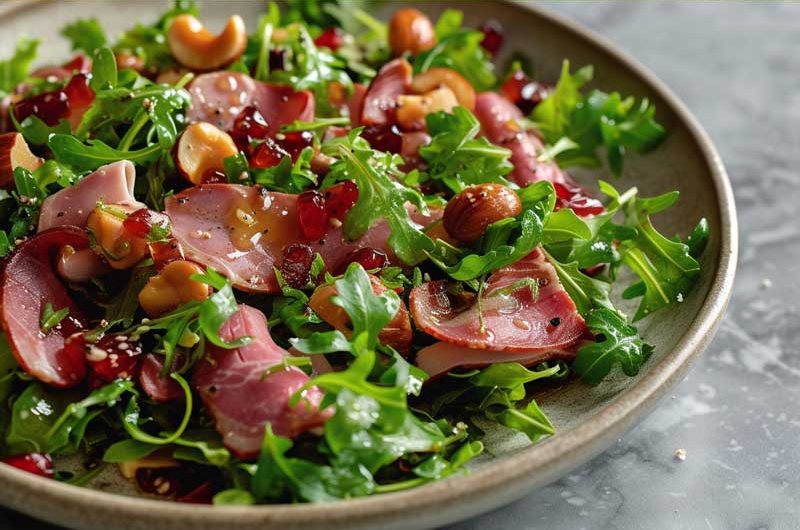
Duck ham salad with chestnuts
4
servings15
minutes470
kcal/serving0
minutes0
minutes15
minutesImmerse yourself in a culinary experience that intertwines the delicate flavor of duck ham with the natural sweetness of chestnuts, all in a salad that captures the essence of autumn in every bite.
This recipe for duck ham salad with chestnuts is not only a feast for the palate, but also a sensory journey that will lead you to appreciate the combination of textures and flavors. While the duck ham provides an incomparable delicacy, the natural cooked chestnuts offer a sweet and tender contrast, making this salad an extraordinarily balanced dish. The honey vinaigrette, with its moderate sweetness and a touch of acid from the sherry vinegar, brings all the components together in perfect harmony.
To make this experience even more memorable, we propose that you prepare this salad while enjoying a specially selected playlist, creating the perfect ambiance for an incomparable gastronomic experience. Start your culinary adventure by preparing the vinaigrette that by simply mixing olive oil, sherry vinegar, honey, salt and pepper will transform a simple salad into a masterpiece.
Salad preparation is just as simple, allowing you to enjoy the process without complications. Wash and dress the mixed salads, add the duck ham and the previously cooked chestnuts, textural and flavorful companions that stand out among the fresh greens.
Don't forget to add a special touch to the chestnuts, cooked with a dash of aniseed, adding a distinguished aroma to this sublime dish. Whether to impress your guests or simply to treat yourself, the duck ham salad with chestnuts promises not only to satisfy your appetite, but also to lift your spirits with its assemblage of thoughtful flavors and impeccable presentation.
Mantén encendida la pantalla de tu dispositivo mientras cocinas
Ingredientes
100 gr Duck ham
100 gr Salad assorted tender sprouts (arugula and spinach)
150 gr plain cooked chestnuts, peeled and drained (ready-to-use weight)
pizca aniseed grains
- Honey vinaigrette
9 c.s. tablespoon olive oil
3 c.s. tablespoon Sherry vinegar
1 c.s. tablespoon Honey
Salt
Ground pepper
Pasos
- Honey Vinaigrette:
- In a bowl, combine 9 tablespoons olive oil, 3 tablespoons sherry vinegar, 1 tablespoon honey, salt to taste and ground pepper.
- Use a fork to whisk until the honey is fully integrated and the mixture emulsifies. Reserve.
- Preparation of Chestnuts:
- The 150 g refers to chestnuts that are already cooked, peeled and drained. If buying ready-to-use chestnuts, drain any liquid, weigh out 150 g, halve them and skip the cooking stage. If starting with fresh chestnuts in their shells, prepare enough to obtain that finished weight and cut a slit in each shell.
- Put the fresh chestnuts in a saucepan, cover with water and add a few anise seeds and a pinch of salt. Cook for about 20 minutes from when the water starts boiling, until tender but still holding their shape; the time may vary with their size.
- Drain the cooked chestnuts and, once safe to handle, remove both the shells and the inner skins while still warm. Weigh out 150 g of peeled, well-drained chestnuts, cut them in half and let them cool before adding them to the salad leaves. Optionally, lightly toast the halves in a dry frying pan; let them cool before assembling the salad.
- Salad Assembly:
- Wash the mixed salads and drain well.
- In a large bowl, season the salads to taste and add the honey vinaigrette prepared earlier. Mix very well so that the leaves are impregnated with the vinaigrette.
- Divide the salad among the serving plates.
- Just before serving, distribute the duck ham and cooked chestnut halves on top of the salad.
Notas
- For duck ham, look for cured or smoked options that can add extra complexity to the flavor. If available, select duck ham that has been cured with spices or herbs. >
- Add a touch of Dijon or whole grain mustard to the vinaigrette to give it a touch of depth and help emulsify the ingredients better. >
- While chestnuts are an excellent addition to this recipe, feel free to experiment with other roasted nuts such as walnuts, almonds or hazelnuts to vary the texture and flavor.
- The 150 g is the weight of plain cooked chestnuts with both shells and inner skins removed, well drained, for the entire recipe serving 4. It does not mean 150 g of raw chestnuts in their shells. Ready-cooked, peeled chestnuts with no added sugar are suitable. If starting with fresh chestnuts, weigh them after cooking, peeling and draining: there is no fixed conversion from the raw weight. The stated 20-minute cooking time applies only when starting with fresh chestnuts.
- Estimated timings: 15 minutes for preparation and assembly, with no cooking, using chestnuts that are already cooked, peeled, drained and cool. This is the basis of the total time shown on the card. If starting with fresh chestnuts, allow about 40–50 minutes overall: heat the water, boil for about 20 minutes until tender, peel and let them cool. Optional toasting is not included.
- Yield: 4 equal servings, each one quarter of the recipe. Estimated weight: about 135 g per serving, calculated from approximately 538 g of ready-to-eat ingredients and all the dressing. This has not been weighed in a kitchen; dressing left in the bowl or optional additions change it.
- Estimated nutrition per serving: approximately 470 kcal. The calculation keeps the published 100 g of cured duck breast and 100 g of salad leaves (assumed to be 50 g arugula and 50 g spinach), 150 g of cooked chestnuts and all the vinaigrette: 9 level tablespoons of oil (about 121.5 g), 3 of vinegar (45 ml) and 1 of honey (21 g). It uses USDA tables and representative labels for cured duck breast (454 kcal/100 g) and cooked chestnuts with no added sugar (170 kcal/100 g). Brands and the amount of dressing eaten change the result. Total carbohydrate includes fiber. Optional ingredients are excluded, and sodium is not estimated because salt is added to taste.
Quizás lo necesites
 Bol grande 3 litrosVer producto
Nutrition facts (per serving)*
- Serving Size: 135g
- Calories: 470kcal
- Fat: 40.3g
- Saturated Fat: 7.7g
- Carbohydrates: 19.9g
- Fiber: 2.5g
- Sugar: 8.4g
- Protein: 9.3g
Have you made this recipe? I want to see it!
Tag @pucheromix on Instagram with the hashtag #mipuchero